Early May, eleven minutes before midnight
The Vatican Intrusion
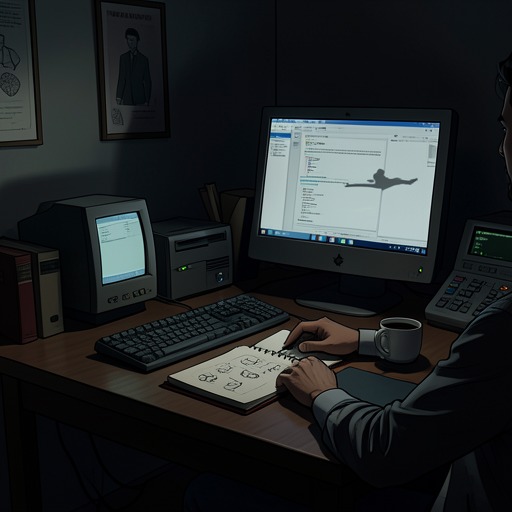
An unidentified hacker penetrates the [Vatican](entity:location-recall-location-416dda4866db)’s central computer system and reaches the restricted list of senior Curia officials. The Jesuit on duty names the intruder [Vísperas](entity:character-recall-character-v-speras-1cc981355d09) and watches in alarm as the hacker breaks into the Pope’s personal terminal.
The breach turns a routine security incident into a matter for the highest levels of the Church: Vísperas has left a message where the Pope will see it.
Immediately after the intrusion
A Message for the Pope
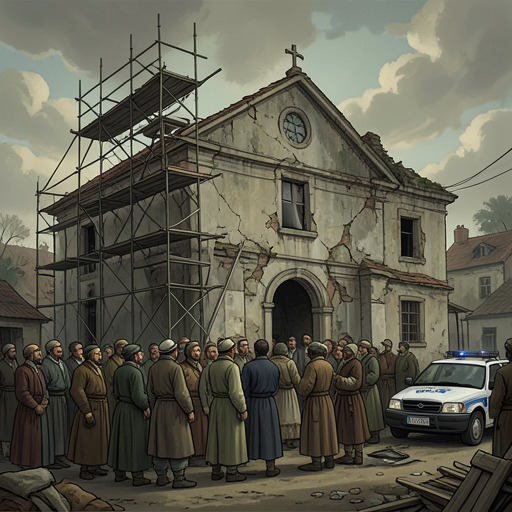
The anonymous message describes a small seventeenth-century church in Seville, abandoned by religious and secular authorities, where merchants threaten God’s house and the building itself supposedly kills to defend it. It asks the Pope to look after the humble members of his flock and hold their persecutors to account.
The appeal gives [Rome](entity:location-recall-location-f3877a21016f) a specific place and a troubling pair of deaths to investigate, while leaving the writer’s identity and the church’s meaning unresolved.
The next morning
Quart Is Summoned
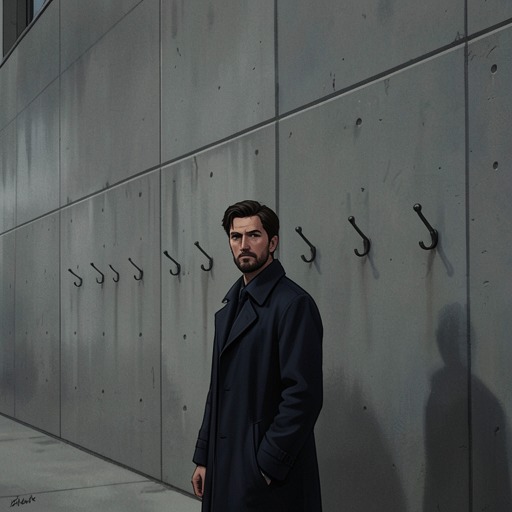
[Lorenzo Quart](entity:character-recall-character-lorenzo-quart-461974c764d0) is summoned to the [Apostolic Palace](entity:location-recall-location-a17cd8caf2cb), where [Paolo Spada](entity:character-recall-character-paolo-spada-564fbb40f4f5) and Cardinal [Jerzy Iwaszkiewicz](entity:character-recall-character-jerzy-iwaszkiewicz-dac2fa03e1fe) brief him on the unauthorized message. The Pope wants an investigation, but Iwaszkiewicz is wary of widening the circle of people who know about it and insists that the inquiry remain discreet.
Quart is ordered to go to Seville, identify [Vísperas](entity:character-recall-character-v-speras-1cc981355d09), and report only to Spada. His assignment places him between rival [Vatican](entity:location-recall-location-416dda4866db) factions as well as the local church authorities he is expected to investigate.
During Quart’s briefing in Rome
The IOE’s Internal War
Spada explains that the inquiry is also a contest for influence within the [Roman Curia](entity:organization-recall-organization-eac800926202). The [Congregation for the Doctrine of the Faith](entity:organization-recall-organization-0104aa217808) has gained power, and Iwaszkiewicz’s hard-line faction threatens the [Institute for External Works](entity:organization-recall-organization-b32ff2cb5c2e).
Quart’s earlier work for the Church weighs on him: he helped expose liberation theologian [Nelson Corona](entity:character-recall-character-nelson-corona-c574b49d32d6), who was later murdered. Spada warns that the Seville assignment matters as much for institutional survival as for the church itself.
During the Rome briefing
The Seville Dispute
Spada outlines the fight over [Nuestra Señora de las Lágrimas](entity:location-recall-location-nuestra-se-ora-de-la-0f70f190143b). The church is deteriorating, restoration has stalled for lack of money, and the city, the [Cartujano Bank](entity:organization-recall-organization-5bc3052a4c48), and the Bruner family all have interests in the valuable [Santa Cruz](entity:location-recall-location-santa-cruz-75c73f774355) site.
Two people connected to the dispute have died: municipal architect [Peñuelas](entity:character-recall-character-pe-uelas-a3ff5bade787) fell from the church roof, and Archbishop [Aquilino Corvo](entity:character-recall-character-aquilino-corvo-0c7f3d421880)’s secretary, Father Urbizu, was killed by falling masonry. Police judged both deaths accidental, but [Vísperas](entity:character-recall-character-v-speras-1cc981355d09)’s description has made them ominous.
Before Quart arrives in Seville
Peregil Hires the Trio
[Celestino Peregil](entity:character-recall-character-celestino-peregil-f30c9c0b173c), aide and fixer to [Pencho Gavira](entity:character-recall-character-pencho-gavira-983d59e47944), takes a six-million-peseta assignment from his employer to solve the church problem. Having gambled away much of the money and burdened by debts, he hires [Don Ibrahim el Cubano](entity:character-recall-character-don-ibrahim-el-cuba-68fe03975d1b), [Potro del Mantelete](entity:character-recall-character-potro-del-mantelete-e6b769a8392f), and [Niña Puñales](entity:character-recall-character-ni-a-pu-ales-fad5595fe35a) for what he presents as an easy job.
The three accept the work despite their unease about interfering with priests. Their precarious partnership and [Don Ibrahim](entity:character-recall-character-don-ibrahim-77cc0c88ddde)’s dream of opening a celebrated copla venue make them vulnerable to a task that will grow far beyond their competence.
Quart’s first morning in Seville
Quart Reaches the Church
After losing his way through [Santa Cruz](entity:location-recall-location-santa-cruz-75c73f774355), Quart finds the crumbling church and sees that the Virgin in its facade niche has been decapitated. Inside, he meets [Gris Marsala](entity:character-recall-character-gris-marsala-8a32ebbbcf60), the American restoration architect, who explains that the work has stalled and that the two deaths have made the place notorious.
Marsala describes the church as a threatened piece of shared memory. Her attachment to it gives Quart his first glimpse of a conflict that cannot be reduced to land value or ecclesiastical procedure.
That morning
The Párroco Rejects Rome
Quart introduces himself to [Príamo Ferro](entity:character-recall-character-pr-amo-ferro-03c630a73fd1), who rejects his credentials, tears up the letter of introduction, and insists that his only superior is the archbishop of Seville. He refuses to cooperate and tells Quart that the church is not his to claim on behalf of [Rome](entity:location-recall-location-f3877a21016f).
The encounter provokes Quart’s contempt for the rural priest, whose poverty and stubbornness recall the life Quart escaped. Marsala warns him that Ferro’s enemies include politicians, bankers, and the archbishop, and that no one is truly on his side.
Before Quart’s meeting with Corvo
The Bank’s Redevelopment Plan
[Pencho Gavira](entity:character-recall-character-pencho-gavira-983d59e47944) meets his mentor, [Octavio Machuca](entity:character-recall-character-octavio-machuca-6276643584ed), at La Campana and reports that the mayor is willing to rezone the [Santa Cruz](entity:location-recall-location-santa-cruz-75c73f774355) site. The [Cartujano Bank](entity:organization-recall-organization-5bc3052a4c48) plans to redevelop it as part of a larger deal involving Puerto Targa and Saudi investors.
Gavira wants to limit the compensation demanded by Corvo and fears the church’s old property conditions and the Bruner family’s rights could stall the project. The transaction is also vital to his attempt to succeed Machuca and protect the bank’s precarious finances.
Quart’s first day in Seville
Corvo Defends His Position
At the Archbishop’s Palace, [Aquilino Corvo](entity:character-recall-character-aquilino-corvo-0c7f3d421880) tells Quart that the church is in ruins and that the authorities are close to approving its demolition. He describes the [1687](entity:time-recall-time-1687-ad560142b31b) Bruner privilege requiring a Thursday Mass for Gaspar Bruner as the main obstacle to secularization.
Corvo admits that the diocese expects a generous payment and new church funding from Gavira’s deal. He also reveals his hostility toward Ferro and his hope that [Rome](entity:location-recall-location-f3877a21016f), rather than the local archbishop, will take responsibility for removing him.
During Quart’s meeting with Corvo
The Archbishop’s Account of Ferro
Corvo portrays Ferro as backward and insubordinate, yet also describes him as unexpectedly progressive on issues such as contraception and the sacraments. The archbishop says he assigned [Óscar Lobato](entity:character-recall-character-scar-lobato-2a19ab08fc89) to help replace the old priest, but Lobato instead sided with Ferro and is being transferred to Almería.
Corvo recounts the deaths of [Peñuelas](entity:character-recall-character-pe-uelas-a3ff5bade787) and Urbizu as accidents, while acknowledging that he had considered using the removal of the Virgin statue to pressure the parish. His account deepens Quart’s suspicion that local authorities are manipulating the crisis.
Later that morning
The First Interrogation
With Corvo presiding, Quart questions Ferro about [Vísperas](entity:character-recall-character-v-speras-1cc981355d09), [Óscar Lobato](entity:character-recall-character-scar-lobato-2a19ab08fc89), [Gris Marsala](entity:character-recall-character-gris-marsala-8a32ebbbcf60), and the deaths. Ferro denies knowledge of the hacker and refuses to swear that no human hand caused the deaths.
When Quart asks why he will not abandon the parish, Ferro says that Quart has never listened to the grief and fear of ordinary people. He calls the church a refuge and a trench, exposing the personal and pastoral stakes beneath the official inquiry.
That day
The Old Trio Begins Surveillance
[Don Ibrahim](entity:character-recall-character-don-ibrahim-77cc0c88ddde), [Potro del Mantelete](entity:character-recall-character-potro-del-mantelete-e6b769a8392f), and [Niña Puñales](entity:character-recall-character-ni-a-pu-ales-fad5595fe35a) begin watching the priests and the [Rome](entity:location-recall-location-f3877a21016f) envoy. Their reconnaissance is shaped more by theatrical instincts and improvised loyalties than by professional skill.
Peregil expects results, while the trio’s own hopes of earning money for a copla venue make them persist. Their surveillance introduces them into the same web of suspicion that surrounds Quart and the church.
That afternoon
The Archbishop’s Palace Meeting
Quart encounters Ferro and Lobato waiting at the Archbishop’s Palace, where Corvo has summoned them. The bishop presents the church dispute as a matter of discipline and institutional order, while Quart recognizes that the meeting is also an effort to steer his investigation.
Corvo warns Quart that his mission has become entangled in the local conflict and tells him to do the work [Rome](entity:location-recall-location-f3877a21016f) sent him to do. The encounter makes clear that the archbishop intends to use the inquiry without accepting responsibility for its consequences.
That afternoon
Quart Questions the Deaths
Quart consults Subcommissioner [Simeón Navajo](entity:character-recall-character-sime-n-navajo-b6ca6ab5169f), who explains the police findings. [Peñuelas](entity:character-recall-character-pe-uelas-a3ff5bade787) fell from a defective roof railing in front of witnesses; Urbizu was struck by a piece of cornice loosened by damp and movement in the scaffolding.
Navajo considers the deaths accidents, though he cannot rule out every possibility. The evidence does not prove that the church literally kills, but it leaves the building at the center of a story in which danger and coincidence seem to converge.
That afternoon
The Postcard Appears
Back at the [Hotel Doña María](entity:location-recall-location-do-a-mar-a-5f723308cc7d), Quart finds an old postcard of the church tucked into a Gideons’ Bible. It is signed by Carlota and addressed to Captain [Manuel Xaloc](entity:character-recall-character-manuel-xaloc-868bd15bc7c6) in [Havana](entity:location-recall-location-8d992dd056a5), but it was never mailed.
The marked Bible passage is Christ’s denunciation of merchants in the temple. The postcard and quotation connect the church’s property fight to an older story of love, loss, and a plea against turning a sacred place into a marketplace.
That evening
Macarena Visits Quart
[Macarena Bruner](entity:character-recall-character-macarena-bruner-e8a5046868a4) visits Quart at his hotel and says she knows why he has come to Seville. She insists that her family can influence the church’s fate and that she intends to keep the building standing.
She urges him to attend Ferro’s Mass and hints that the church and its priest are necessary in ways he has not yet understood. Their attraction is immediate, but their conversation remains tangled with the political struggle and the question of who is using whom.
That night
The Dinner at La Albahaca
Macarena takes Quart to [La Albahaca](entity:location-recall-location-la-albahaca-e824e8332315), where their appearance together attracts the attention of Seville’s social circle. She speaks openly of her separation from Gavira and of her complicated attachment to her husband, while testing Quart’s restraint and celibacy.
She explains that she supports Ferro because the church belongs to her family’s memory as well as to its parishioners. Their growing intimacy makes Quart’s ostensibly neutral assignment increasingly personal.
That evening
Bonafé Presses Quart
[Honorato Bonafé](entity:character-recall-character-honorato-bonaf-a949db6e7522) approaches Quart at the hotel and offers information about Ferro in exchange for material for [Q+S](entity:organization-recall-organization-q-s-467a21635b61). He threatens to publish regardless of whether Quart cooperates and treats the Church as a convenient target for scandal.
Quart refuses to be drawn into the bargain and forces the journalist out of the hotel. Bonafé leaves with a grudge and a growing collection of secrets about the people surrounding the church.
That night, during Quart and Macarena’s conversation
Carlota’s Love Story
Macarena explains that [Carlota Bruner](entity:character-recall-character-carlota-bruner-30843adeb088) fell in love with [Manuel Xaloc](entity:character-recall-character-manuel-xaloc-868bd15bc7c6), a poor mariner whose departure was engineered by her powerful family. Carlota wrote him for years, but her father intercepted the letters, leaving her to wait in the palomar until she lost her sanity.
Xaloc returned with a fortune and a wedding gift of twenty pearls, only to find that Carlota no longer recognized him. He left the pearls with the church and returned to the sea, turning their failed love into a family legend embodied in the Virgin’s image.
The next morning at eight
Quart Attends Mass
Quart attends Ferro’s early Mass and sees a congregation of elderly neighbors and working people gathered around the priest’s old-fashioned Latin ritual. The service gives them a place for grief, habit, and consolation rather than spectacle.
For the first time, Quart understands why the shabby church matters to Ferro and its worshippers. The insight unsettles the distance on which Quart’s professional role depends.
After Mass
Marsala’s Wound
[Gris Marsala](entity:character-recall-character-gris-marsala-8a32ebbbcf60) tells Quart that she left her religious community temporarily after falling in love with a bishop and injuring herself in a moment of anguish. In Seville she has found a cause in the restoration work and a renewed sense of purpose.
Her account reveals that the people defending the church are not a single organized faction. Each has arrived there through a separate crisis of faith, memory, or identity.
Later that morning
The Bruner Crypt
Marsala takes Quart to the church crypt and shows him Carlota’s tomb. Quart recognizes the name from the postcard and realizes that the lost lover’s story is physically anchored in the same church now threatened with demolition.
Marsala explains that Xaloc’s pearls were intended for Carlota’s wedding and became the tears on the Virgin’s statue. The mystery of the postcard now joins the church’s preservation fight to the fate of the lovers’ memory.
That afternoon
Quart Searches Ferro’s Home
While Ferro and Lobato are away, Quart breaks into the parish residence to search it. He finds a tender photograph of Ferro with Macarena and her mother, evidence of a more human side than the priest’s hostile public manner suggests.
In Lobato’s room he discovers religious books and boxes of computer disks, giving him a plausible lead on [Vísperas](entity:character-recall-character-v-speras-1cc981355d09). Yet there is no computer or modem in the house, and the evidence remains inconclusive.
During the home search
Quart and Lobato Fight
Lobato returns unexpectedly and confronts Quart, then throws a punch. Quart avoids the first blow, is struck glancingly by the second, and stops the young priest with a kick and a controlled punch.
Afterward Quart apologizes and tries to explain the investigation. Lobato says he has chosen Ferro’s side and would rather lose his promising career than abandon the church.
Immediately after the fight
Lobato Explains the Trench
Lobato describes the Church as a system that has betrayed its original message and insists that Ferro’s parish has taught him what faith means: trust, consolation, and a hand reaching into darkness. He calls himself a priest willing to be uncomfortable and accepts the punishment of transfer.
His testimony echoes Ferro’s language of the church as a trench. Quart hears a conviction that challenges the institutional vocabulary he has long used to keep moral questions at a distance.
That night
Vísperas Sends a Second Warning
[Vísperas](entity:character-recall-character-v-speras-1cc981355d09) again enters the [Vatican](entity:location-recall-location-416dda4866db) system and leaves a biblical warning in a decoy file, quoting a lament over a ravaged sanctuary. The Vatican’s Jesuit team prevents the hacker from reaching the Pope’s actual computer but cannot trace the intruder.
A bouncing-ball virus appears alongside the message, confirming Vísperas’s technical skill and mischievous familiarity with the system. The warning intensifies the sense that someone is trying to defend a threatened sanctuary by appealing to [Rome](entity:location-recall-location-f3877a21016f).
The following day
Gavira’s Financial Gamble
Gavira reviews a confidential investigation into the [Cartujano Bank](entity:organization-recall-organization-5bc3052a4c48), which describes concealed risks, questionable accounting, and the bank’s dependence on the proposed Puerto Targa sale. The church redevelopment is meant to make that larger transaction more attractive and buy Gavira time in his contest to succeed Machuca.
A hacker’s playful virus and biblical message have also appeared in the bank’s system, alarming Gavira because the file could expose his scheme. He deletes the confidential report from his computer and decides that the church’s opponents must be swept aside.
After reviewing the bank report
Gavira Orders Force
Furious at the people threatening his church deal, Gavira tells Peregil to set fire to the building or use whatever means seem appropriate. He wants the obstruction removed before his banking and property plans collapse.
The order makes Peregil’s already compromised position more dangerous and draws [Don Ibrahim](entity:character-recall-character-don-ibrahim-77cc0c88ddde)’s trio toward an act they themselves regard as sacrilegious.
That day
The Trio’s Firebomb Misfires
[Don Ibrahim](entity:character-recall-character-don-ibrahim-77cc0c88ddde) prepares an incendiary device from an Anís del Mono bottle and gasoline, while [Niña Puñales](entity:character-recall-character-ni-a-pu-ales-fad5595fe35a) objects to burning a consecrated church. The plan is to make the fire look accidental and merely damage the building enough to prevent Thursday’s Mass.
The Potro’s cigarette ignites the spilled fuel before the device can be used. The resulting fire injures the trio and damages their table, but the church is spared, and the men are left ashamed and indebted to fate.
That evening
Quart and Ferro Talk Beneath the Stars
Quart visits the palomar and speaks with Ferro about astronomy, the Church, and the indifference of the universe. Ferro explains that he sold a medieval altarpiece years earlier to repair a poor parish and help its people, valuing their lives above the artwork.
He says his present defense of the church is not about its artistic worth but the comfort it gives its congregation. Their exchange brings the two priests into a brief, honest fellowship grounded in shared loneliness and the search for consolation.
That night, after the observatory conversation
Macarena Reveals Her Loss
At the river, Macarena tells Quart that she became pregnant and, under Gavira’s pressure, had an abortion. Complications required an emergency hysterectomy, leaving her permanently unable to have children; neither her mother nor her husband knows the full truth.
She has turned her pain into a personal war against Gavira and the forces that threaten the church. Quart is deeply drawn to her, but his discipline and fear of implication keep him from answering her invitation to follow Carlota’s ghost.
Before dawn the following morning
Quart Sleeps with Macarena
After the long night, Quart and Macarena become lovers at the [Casa del Postigo](entity:location-recall-location-f92d86b39ebf). Their intimacy is intense but shadowed by the knowledge that it cannot undo the choices and losses that have shaped her life.
At dawn Quart leaves alone, uncertain whether he has betrayed his vocation or finally crossed into a more honest understanding of himself. Their relationship is no longer merely a tactical flirtation or an imagined possibility.
The morning after the night together
Bonafé Is Found Dead
Marsala arrives at the church and finds it locked, then discovers [Honorato Bonafé](entity:character-recall-character-honorato-bonaf-a949db6e7522) dead in the confessional. The police are called, and the church fills with investigators as Quart learns that Ferro has disappeared.
The body appears to show a violent death rather than another accident. Ferro’s absence makes him the leading suspect, while the timing threatens the Thursday Mass that protects the church under the old Bruner condition.
That morning
Quart Questions Marsala
Marsala tells Quart that she found Bonafé after entering through the sacristy, having first checked Ferro’s residence. She says she had seen the journalist approach her and Lobato before, but does not know where Ferro has gone.
Quart advises her to consult the lawyer he has summoned from Madrid and urges caution while the police investigate. Her distress makes clear that the church’s crisis has become a personal loss rather than an abstract restoration dispute.
That morning
Macarena Denies Ferro’s Guilt
Quart finds Macarena with police at the [Casa del Postigo](entity:location-recall-location-f92d86b39ebf). She insists Ferro did not kill Bonafé and argues that his calm visit to the house the previous night is inconsistent with a deliberate murder.
She also recognizes the immediate danger: if no Thursday Mass is celebrated, the church’s protection may lapse and Gavira’s allies may move quickly. Quart asks her to help locate Ferro before the police do.
That afternoon
Gavira Confesses to a Plan
Macarena and Quart confront Gavira at La Campana in front of Machuca. Gavira admits that he considered using force against Ferro and had set people moving around the church, but denies any role in Bonafé’s death or Ferro’s disappearance.
Macarena tells him that the disappearance bears his style even if he is technically truthful. Her accusation unsettles him, and he leaves for a business lunch with his composure damaged.
That night
Ferro Is Held on the Canela Fina
Peregil’s hired trio has abducted Ferro and confined him on the [Canela Fina](entity:object-recall-object-f70e8d7d8572), intending to keep him away until after Thursday’s Mass. [Don Ibrahim](entity:character-recall-character-don-ibrahim-77cc0c88ddde), the Potro, and the Niña struggle to maintain control of the situation, while Peregil arrives to check on the captive.
At the same time, Peregil remains under pressure from the lenders [Mairena](entity:character-recall-character-mairena-3fee2ca5476c) and the [Pollo Muelas](entity:character-recall-character-pollo-muelas-e380ee6b492d). His debts and divided loyalties put the rescue plan and the church in increasing danger.
Late Wednesday night
Peregil Is Beaten
Near the Guadalquivir, [Mairena](entity:character-recall-character-mairena-3fee2ca5476c) and the [Pollo Muelas](entity:character-recall-character-pollo-muelas-e380ee6b492d) intercept Peregil and tell him his deadline has arrived. He bolts rather than pay them, but they catch him and break his arm and other bones.
His failure to reach the planned exchange leaves Macarena and Quart waiting by the [Canela Fina](entity:object-recall-object-f70e8d7d8572) without a reliable intermediary. The crisis shifts from a managed abduction to an improvised rescue.
Just after midnight
The Rescue Begins
When Peregil fails to appear, Gavira joins Macarena and Quart by the river. The three decide to board the darkened [Canela Fina](entity:object-recall-object-f70e8d7d8572) rather than wait longer or immediately involve the police.
Quart takes a metal bar and enters first, with Gavira beside him and Macarena assigned to reach Ferro. Their uneasy alliance briefly replaces their earlier antagonism with a shared need to recover the priest.
Minutes after midnight
The Canela Fina Brawl
[Don Ibrahim](entity:character-recall-character-don-ibrahim-77cc0c88ddde)’s crew mistakes the arrivals for the expected ransom party, but the attempt to talk collapses when the Potro strikes Gavira. The cabin erupts into a chaotic fight: the Potro attacks, the Niña clashes with Macarena, and Quart and Gavira struggle with the captors in the dark.
The trio escapes ashore, while Quart, Macarena, and Gavira find Ferro and bring him onto the deck. The rescue succeeds, but it leaves the priest in the hands of the Church’s representatives and facing the police investigation.
On the Canela Fina, after the rescue
Ferro Admits the Killing
Quart explains that Ferro has no alibi for the period when Bonafé died and that the police will want him to account for the body in the church. Ferro refuses to invent an account that would protect him and says that Bonafé was already dead when he shut the sacristy door.
He then tells Quart plainly that he killed Bonafé and asks to be handed over to the police. Macarena is devastated, while Gavira remains silent; the confession appears to remove the last practical obstacle to the church’s demolition.
Before dawn
Ferro Is Arrested
Quart brings Ferro to the police station, where the priest gives a brief formal statement confessing to Bonafé’s death. He offers no fuller account of the two earlier deaths and refuses to explain his disappearance.
Marsala denies believing that Ferro is guilty, but the police treat the confession and the physical evidence as substantial. Quart’s role shifts from discreet investigator to the priest’s advocate and fellow cleric.
At the police station before dawn
The False Pearl
Navajo shows Quart a pearl found in Bonafé’s pocket and explains that it is an imitation. The police believe all twenty pearls on the Virgin have been replaced, and evidence suggests the originals entered the illicit market through [Francisco Montegrifo](entity:character-recall-character-d773e77d9eab).
The money from their sale may have funded Ferro’s restoration work. Bonafé may have discovered the substitution and confronted the priest, giving the killing a plausible motive that also exposes Ferro’s earlier dealings with church art.
Before dawn, after Ferro’s statement
Quart Absolves Ferro
Before Quart can leave the station, he kneels before Ferro and asks him for absolution. The gesture acknowledges Quart’s earlier complicity in the Church’s persecution of dissidents and his newly accepted responsibility for taking sides.
Ferro gives him the sign of the cross and the silent ritual of consolation. Their exchange turns the investigation’s moral question inward: Quart has ceased to be merely an observer of other people’s sacrifices.
Thursday morning at eight
Quart Celebrates the Thursday Mass
After leaving the police station, Quart walks through Seville until he reaches the church. He opens it, waits for dawn, prepares the vestments, and rings the bell for the service.
He celebrates the Thursday Mass himself, preserving the condition that protects the church and giving its congregation the ritual they came for. His act is a public break with the strict neutrality of his assignment, made in the name of the people who still depend on the parish.
The following weeks
Ferro’s Trial and Sentence
Ferro remains in custody and is eventually judged responsible for Bonafé’s death, with the case treated as involuntary homicide. He is sent to a supervised residence for elderly priests, his health already precarious.
The legal outcome leaves the questions around the earlier deaths and Ferro’s deeper motives unresolved. The church’s future, meanwhile, remains uncertain as Gavira’s redevelopment scheme loses its central obstacle only at the cost of public scandal.
A few days after Quart returns to Rome
Quart Is Exiled from the IOE
Spada tells Quart that the Pope has received his report and that instructions have been issued to preserve the church and appoint a new parish priest. Quart’s closing appeal about the church as a patch on the drum of faith has helped, though the resolution comes at a personal cost.
Iwaszkiewicz uses Corvo’s report to accuse Quart of exceeding his authority and compromising his impartiality. Spada saves him from a humiliating desk post but arranges a temporary diplomatic exile to a South American nunciature.
The night before his departure from Seville
Quart Says Goodbye to Macarena
Quart and Macarena take a final walk through Seville, speaking politely about Ferro, the church, and Quart’s departure. Neither names the intimacy they shared, and both return to formal distance.
Quart leaves knowing that the experience has changed his understanding of himself, even if discipline will again govern his outward life. Macarena calls him back before he goes and says she has something he has earned the right to see.
That night, before Quart leaves Seville
The Duchess Is Vísperas
Macarena takes Quart to the hidden computer room, where he finds [Cruz Bruner](entity:character-recall-character-cruz-bruner-88057152afdf) operating a sophisticated computer system. The elderly duchess reveals that she learned computing out of curiosity, became involved in hacker networks, and adopted the alias Reina del Sur.
She explains that she entered the [Vatican](entity:location-recall-location-416dda4866db) system to bring attention to Ferro and the threatened church. She also sent the postcard to Quart and has now begun transmitting the [Cartujano Bank](entity:organization-recall-organization-5bc3052a4c48) audit report to Seville’s newspapers, turning her private technical skill into a direct attack on Gavira’s plans.
During the same night
The Bank Report Is Leaked
[Cruz Bruner](entity:character-recall-character-cruz-bruner-88057152afdf) sends the confidential audit findings to the press, exposing the [Cartujano Bank](entity:organization-recall-organization-5bc3052a4c48)’s hidden risks and Gavira’s role in the Puerto Targa scheme. She acknowledges that the revelation may harm the bank and her son-in-law, but believes the church must be defended.
Macarena does not try to stop her mother. The leak ensures that Gavira’s political and financial victory will not be clean, even as the church’s preservation receives institutional support.
In the months after Quart’s departure
The Church Survives
Quart receives scattered news from [Rome](entity:location-recall-location-f3877a21016f) and South America. [Nuestra Señora de las Lágrimas](entity:location-recall-location-nuestra-se-ora-de-la-0f70f190143b) remains open as a parish, and [Óscar Lobato](entity:character-recall-character-scar-lobato-2a19ab08fc89) writes from his new post to report its continuing life.
Gavira resigns his executive responsibilities after Machuca retires from the [Cartujano Bank](entity:organization-recall-organization-5bc3052a4c48). The redevelopment drive that threatened the church has therefore failed to deliver the triumph he sought.
The winter after Quart’s transfer
The Last News of Ferro
Ferro remains in the supervised residence, isolated from the other priests and in declining health. He spends evenings outdoors, when the weather permits, looking at the stars.
Quart learns that Ferro is unlikely to live until spring. The old priest’s vigil under the sky continues the novel’s meditation on faith, solitude, and the consolation people offer one another even when the universe gives no answer.
Years later
Marsala in Chiapas
Much later, Quart sees a newspaper photograph of a woman teaching children in a village controlled by rebels in Chiapas. The image is unclear, but the woman’s short gray braid and cold, defiant eyes resemble [Gris Marsala](entity:character-recall-character-gris-marsala-8a32ebbbcf60).
Quart cannot be certain that it is her, and the novel leaves the sighting unresolved. The possible encounter suggests that Marsala has continued to choose a life of action beyond the church and beyond the identities others once assigned to her.